DOP 2: Delete One Part
- 4.6
- Rating
- 100.00M
- Installs
- Free
- Price
 Analysis by App-foxy
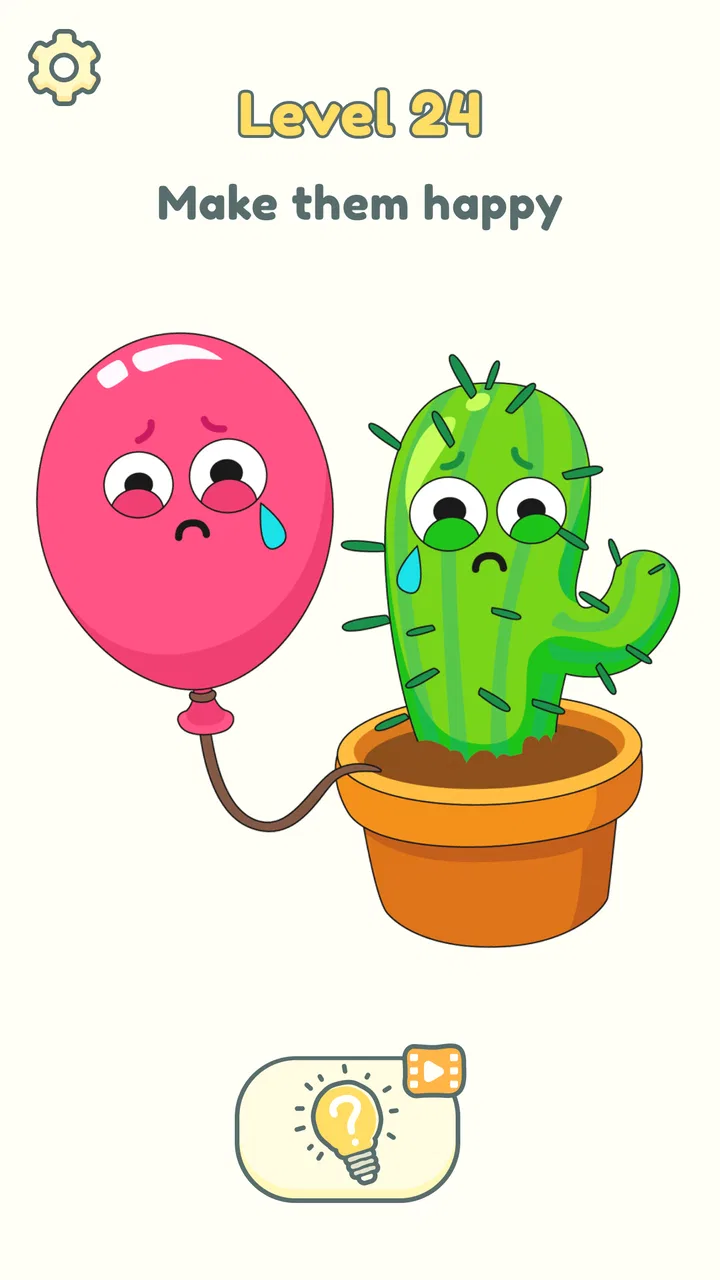
DOP 2: Delete One Part is the kind of puzzle game I open when I want something quick, visual, and easy to understand without being completely mindless. Its central idea is simple: look at a cartoon scene, decide what is out of place or blocking the solution, and erase one part with a swipe. That sounds almost too basic, but the appeal comes from interpreting the picture rather than merely spotting a matching shape.
After spending time with it, my overall view is clear: this is a friendly casual game with a clever premise, especially good for short breaks and players who enjoy visual riddles. It is not a deep logic game, and it does not try to be one. The best moments come from noticing a small visual clue that changes the meaning of the entire scene. The weaker moments arrive when the intended answer depends more on the developer’s sense of humor than on a genuinely fair deduction.
How the one-part deletion puzzles actually feel
Each challenge presents a compact illustration and asks me to remove something with my finger. The drawing usually contains a character, object, or situation that needs to be corrected. The satisfying part is that the solution is rarely just “erase the biggest object.” I have to inspect the image, consider what the scene is trying to communicate, and decide which detail is preventing the expected outcome.
You May Also Like

 AccuWeather: Weather Radar
AccuWeather Review: A Quick, Clear Forecast for Everyday Decisions
For everyday plans, the best forecast is the one you can understand quickly. AccuWeather makes rain timing, radar, and local conditions easy to act on, with a few trade-offs.

 Hill Climb Racing
Why Hill Climb Racing Still Turns Crashes Into One More Run
A tiny car, a bumpy hill and one more upgrade: Hill Climb Racing keeps resurfacing because its simple chaos makes every near-miss feel personal.

 AliExpress - Shopping App
AliExpress Makes Global Shopping Feel Personal, but Shoppers Bear the Risk
AliExpress turns a global marketplace into a pocket-sized discovery engine. Its reach is useful, its shopping loop compelling, and its trade-offs easy to miss.

 Lords Mobile: Kingdom Wars
Lords Mobile Is a Kingdom-Building Routine, Not a Quick Match
A case-by-case verdict on the building, battles, device demands, and social commitments that make Lords Mobile rewarding for some players and exhausting for others.

 PDF Scanner app - TapScanner
TapScanner Makes Paperwork Easier to Capture, Check, and Share
TapScanner makes scanning with a phone feel less like a rescue operation and more like a dependable step in getting work done. Its capture tools are useful, though not flawless.

 Block Blast!
 Shows How Much a Puzzle Game Can Leave Out
A quiet grid game shows why puzzle players increasingly value instant clarity, repeatable skill and low-pressure play—and where the genre still needs to catch up.
More From Our News Desk
View All News


The swipe itself is uncomplicated. I do not need to master timing, complicated gestures, or a collection of controls. That makes the game immediately approachable for children old enough for its Teen content rating, older players who prefer relaxed puzzles, and anyone who does not want a tutorial-heavy experience. The challenge is in the observation, not in learning the interface.
What I like most is the way the game turns a familiar picture into a small visual joke. A scene may look obvious at first, then one apparently harmless detail becomes the key. This gives the puzzles a light “look again” quality. I often find myself scanning the background and the characters’ expressions before touching the screen, because the answer can depend on a detail that is easy to ignore during the first glance.
That design also makes the game suitable for very short sessions. I can play a few puzzles while waiting for an appointment or during a quiet moment at home, then put it down without losing the thread of a long campaign. There is no need to reserve a full hour or prepare for a complicated strategy session. The format respects casual play, although players who want a demanding brain-training routine may find it too gentle.
Why the visual clues work better than a standard riddle
Traditional word riddles ask me to process language, while these puzzles communicate through position, expression, color, and context. That makes the experience feel more immediate. I do not have to parse a paragraph of instructions before attempting a solution. The image gives me the problem, and my task is to read it.
A useful habit is to ask what would change if one object disappeared, rather than asking which object looks unusual. That distinction matters. A strange-looking item may be decoration, while an ordinary line or accessory may be the part that creates the problem. I found that treating the scene as a tiny story worked better than searching for a highlighted target.
Another practical tip is to avoid swiping randomly at the first plausible object. When the answer is not obvious, I get better results by checking relationships: who is holding what, what is covering something else, and whether an object creates an obstacle. This turns the game from a reflex exercise into a small act of visual reasoning. It is a modest insight, but it makes the later puzzles feel less arbitrary.
The artwork supports this approach. The scenes are readable at a glance, with enough exaggeration to make the intended situation understandable. I never felt that the game was asking me to study a cluttered illustration at microscopic detail. At the same time, the simple style can make some solutions feel underexplained when several objects seem equally removable.
The strongest reason to keep playing
The biggest strength is its low barrier to entry combined with a steady stream of small surprises. Many casual puzzle games are easy to start but become repetitive because every level uses the same mental trick. Here, the basic action remains constant, yet the meaning of each scene changes. I may be looking for an obstruction in one puzzle and a visual contradiction in the next.
That variation gives the game a pleasant rhythm. I solve a scene, enjoy the little reveal, and move on before the idea becomes exhausting. The game does not demand that I memorize a complicated system. Instead, it rewards curiosity and a willingness to question the first interpretation of the drawing.
I also appreciate that the game can be shared informally. If someone nearby is curious, I can hand over the phone and let them inspect the current scene without explaining a control scheme. This works well with family members or friends who do not usually play mobile games. The puzzle is visible to both people, so solving it together feels natural rather than like one person watching another manage a complex interface.
For parents, that accessibility is useful, but I would still pay attention to the Teen rating before handing it to a younger child. The rating is part of the product information, and the game’s cartoon presentation should not automatically be treated as suitable for every age. My recommendation would be to check the device’s store settings and decide based on the child, rather than assuming that a simple drawing style tells the whole story.
Where the experience loses some of its fairness
The main weakness is that the game’s logic is not always as precise as its presentation suggests. A good visual puzzle should make the answer feel inevitable once I see it. In some challenges, the intended deletion can instead feel like a guess based on what the creator probably meant. I may understand the scene but still fail because I interpreted the illustration differently.
That issue is especially noticeable when multiple parts appear to be valid targets. If the game expects one exact object, the surrounding drawing needs to establish why that object matters. When it does not, the failure feels less like a lesson and more like a mismatch between the player and the level’s hidden assumption. This is not a deal-breaker for a casual title, but it limits how seriously I can take the puzzle design.
Hints can help when I am stuck, yet using assistance changes the satisfaction of solving the scene independently. I prefer to pause, inspect the picture again, and test a more specific theory before reaching for help. That approach also reveals whether I was missing a clue or simply guessing at the developer’s intended joke. Players who dislike trial and error may become impatient more quickly than players who enjoy playful experimentation.
The other limitation is depth. The game’s central interaction is charming, but it remains a single-action format. If I am looking for layered deduction, inventory management, branching solutions, or puzzles that build a complex skill over time, this is not the right choice. It offers variety in situations rather than a large toolkit of mechanics.
Free access and the practical trade-off
The game is free to download, which makes it easy to try without committing money at the start. It includes in-app purchases priced at $1.99 per item. I would approach those purchases as a convenience rather than something that transforms the game. The core attraction is already present in the simple deletion mechanic, so spending is not necessary to understand why the game works.
Still, anyone who dislikes mobile monetization should consider how they feel about optional purchases before settling in. A free puzzle game can be enjoyable while also creating moments where a player is tempted to pay for progress or assistance. My advice is to decide in advance whether you want to solve everything unaided and, if the device is shared with a child, use the platform’s purchase controls.
The large audience suggests that the concept has broad appeal: it has a 4.6 average from around 759 thousand ratings and has passed 100 million installs. I see those figures as evidence that the format is easy for many people to pick up, not proof that every puzzle will suit every player. Popularity cannot remove the subjective issue of whether a particular solution feels fair.
Performance, availability, and what to expect from the current build
SayGames Ltd is the developer, and the game was released on December 10, 2020. The current version is 1.3.39, with Android support beginning at version 8.0. Those details make it a practical option for many existing Android devices, though I would still check the operating system before trying to install it on an older phone or tablet.
I would not choose this game because I expect a long-form adventure or a technically demanding production. Its value is in the compact scenes and the quick mental reset they provide. That focus is a strength on a phone, where a game needs to be readable and playable in small bursts, but it also means the experience may feel slight if I sit down expecting a substantial narrative or a serious test of logic.
The store summary describes the basic premise as erasing part of an image to solve a puzzle, while the short description identifies it as DOP 2. In practice, that summarizes the control but not the reason to play. The real draw is the interpretation between those two actions: I am not just removing pixels; I am trying to understand what the scene wants me to notice.
Who will enjoy it most in everyday use
I think the best audience is someone who likes casual puzzle games but does not want a strict timer or a complicated rulebook. It works particularly well for a commuter who has a few spare minutes, a parent looking for a game that can be demonstrated quickly, or a player who enjoys discussing visual jokes with another person. The levels are easy to show someone, and the basic interaction does not require gaming experience.
A realistic use case is a short wait at a café. I can open the game, solve several scenes, and stop when my order is ready without worrying about losing a long chain of progress. If one puzzle feels unclear, I can leave it for later rather than forcing myself through a difficult section. That flexibility is more important here than a large feature list.
I would recommend skipping it if your favorite puzzle games are built around exact deduction and carefully formalized rules. Someone who enjoys sudoku, nonogram puzzles, or intricate escape-room games may find the solutions too dependent on cartoon context. Those alternatives are better when I want a system that can be analyzed consistently, while this game is better when I want a playful visual prompt.
It is also not my first recommendation for people who need a completely uninterrupted, premium-style experience. The free model and optional purchases may create friction for players who prefer to pay once and remove every distraction. In that case, a paid puzzle title with a more deliberate structure would probably feel more satisfying, even if it offered fewer quick laughs.
My final recommendation after playing
DOP 2: Delete One Part succeeds because it keeps its promise focused: each scene asks me to look carefully, remove one meaningful element, and enjoy the result. I value its immediate controls, readable illustrations, and ability to turn a few idle minutes into a small reasoning exercise. It is approachable without being entirely automatic, and its best puzzles reward observation rather than speed.
My reservation is equally straightforward. The game sometimes confuses cleverness with ambiguity, and players who demand airtight logic may lose patience. The single-action structure also limits long-term depth. I would not describe it as a replacement for a serious puzzle collection; I would describe it as a light companion to one.
For me, that is enough to recommend it with the right expectations. Install it if you want colorful visual challenges, quick sessions, and occasional “how did I miss that?” moments. Keep your expectations modest about complexity, and be prepared to rethink a scene when the answer does not immediately feel fair. As a free puzzle game for casual play, it earns a place on my phone; as a demanding logic experience, it is better treated as a warm-up than a final destination.
FAQs for DOP 2: Delete One Part
01What is the main objective of DOP 2: Delete One Part?
DOP 2: Delete One Part is a puzzle game where the main objective is to solve each level by erasing a specific part of the image on the screen. The challenge lies in figuring out which part to delete to reveal a hidden element or solve the puzzle, offering an engaging and brain-teasing experience.
02Is DOP 2: Delete One Part suitable for all age groups?
Yes, DOP 2: Delete One Part is designed to be suitable for players of all ages. Its simple yet challenging puzzles make it accessible to children, while still providing enough complexity to entertain adults. The intuitive controls and lack of complex instructions make it easy for anyone to pick up and play.
03Does DOP 2: Delete One Part require an internet connection?
No, DOP 2: Delete One Part can be played offline, which means you can enjoy the game without needing an internet connection. This makes it a convenient option for playing on the go, whether you're traveling or in areas with limited connectivity.
04Are there in-app purchases in DOP 2: Delete One Part?
Yes, DOP 2: Delete One Part offers in-app purchases. These typically include options to buy hints or remove ads to enhance the gaming experience. While the game can be enjoyed for free, these purchases can make progressing through the puzzles more convenient.
05How does the hint system work in DOP 2: Delete One Part?
The hint system in DOP 2: Delete One Part provides players with clues to help solve particularly challenging puzzles. Hints can be purchased using in-game currency or real money. This feature is especially useful for players who might get stuck and need a little extra guidance to progress.
Pros
- Engaging puzzle mechanics keep you entertained.
- Simple controls make it easy to play.
- Vibrant graphics enhance the experience.
- Frequent updates with new levels.
- No internet required for gameplay.
Cons
- Ads can be intrusive at times.
- Some puzzles may feel repetitive.
- Limited hints without purchase.
- Occasional bugs in level transitions.
- No multiplayer or social features.

DOP 2: Delete One Part
Gallery